So how Long Do Diesel Engines Last? Diesel engines last significantly longer than gasoline engines. A well-kept diesel engine can handle heavier loads, longer run times, and tougher conditions than gas engines.
But lifespan isn’t measured by miles alone. Diesel engines are also assessed by engine hours, duty cycle, and wear from real-world temperatures and load demands. Some engines fail early at 200,000 miles. Others push past 1 million miles with proper care.
This article breaks down the average lifespan of a diesel engine, what actually affects longevity, warning signs of wear and tear, and how professional diesel engine repair can dramatically extend service life—especially for heavy duty trucks and commercial fleets.
 Quick Takeaways
- Most diesel engines last 500,000 to 1,000,000 miles
- Well-maintained commercial diesels can exceed 1 million miles
- Engine lifespan depends more on maintenance and usage than brand
- Preventive diesel engine repair dramatically extends service life
- Early repairs cost far less than full engine rebuilds or replacements
How Long Do Diesel Engines Last on Average?
The average lifespan of a diesel engine depends on how it’s used and how well it’s maintained. Mileage matters, but it’s only part of the picture.
Average Diesel Engine Lifespan in Miles
Passenger Diesel Vehicles
Many reach 300,000 to 500,000 miles with regular maintenance. That already doubles the typical gas engine lifespan, which often tops out around 200,000 miles.
Medium-Duty Trucks
These commonly reach 500,000 to 800,000 miles, especially when used for highway driving under stable operating conditions.
Heavy-Duty Semi-Trucks
Properly maintained diesel engines in heavy duty trucks often exceed 1,000,000 miles before requiring a major overhaul.
Diesel Engine Lifespan in Engine Hours
For commercial fleets, engine hours matter more than miles.
An engine that idles for hours in traffic or at job sites experiences wear and tear without accumulating mileage. That stress still counts.
- Light-duty diesel engines: 6,000–10,000 hours
- Heavy-duty commercial engines: 15,000–30,000 hours before overhaul
A maintained diesel engine running steady highway miles can outlast one with lower mileage but harsh duty cycles.
Why Diesel Engines Last Longer Than Gas Engines
Diesel engines aren’t just different. They’re engineered for longevity.
Heavier Engine Components
Diesel engines use:
- Thicker engine blocks
- Stronger internal components
- Tighter tolerances designed for compression ignition
They also operate at lower RPMs, which reduces friction and heat-related damage over time. Gasoline engines rev higher and wear faster. That difference adds up over hundreds of thousands of miles.
Diesel Combustion and Torque Characteristics
Diesel engines rely on compression, not spark plugs.
That creates:
- More consistent combustion
- Less stress per cycle
- Higher torque at lower RPMs
Lower RPM operation reduces internal wear, especially during long-haul driving. This is a key reason diesel engines outlast gasoline counterparts under sustained workloads.
What Factors Most Affect Diesel Engine Lifespan
Brand matters less than how the engine is treated.
Maintenance Frequency and Quality
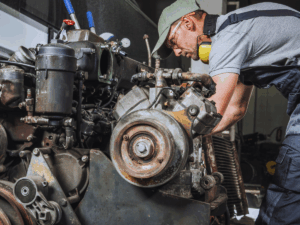 Regular maintenance is the single biggest factor in extending the lifespan of a diesel.
That includes:
- Timely oil changes
- Clean fuel and air filters
- Cooling system inspections
Skipping service accelerates wear on engine components and shortens the average lifespan dramatically.
Driving Conditions and Load
How an engine works matters as much as how long it works.
- Stop-and-go driving increases heat and stress
- Heavy towing raises operating temperatures
- Excessive idling creates wear without mileage benefits
Engines running steady highway miles age more gracefully than those in constant congestion or high-load environments.
Fuel Quality and Filtration
High quality fuel protects injectors and combustion chambers. Poor fuel does the opposite.
Contaminated diesel causes:
- Injector wear
- Combustion imbalance
- Premature engine damage
Proper filtration and water separation prevent fuel-related failures that cut engine life short.
Signs a Diesel Engine Is Nearing the End of Its Life
Diesel engines give warnings before they fail. Ignoring them is expensive.
Performance and Efficiency Changes
- Loss of power under load
- Declining fuel economy
- Sluggish throttle response
These often point to injector issues, compression loss, or turbocharger wear.
Mechanical Warning Signs
- Excessive blow-by
- Hard starts, especially cold
- Heavy smoke at idle or acceleration
- Knocking or abnormal engine noise
Catching these early can mean repair instead of replacement.
Can Diesel Engines Last Over 1 Million Miles?
Yes—but not by accident.
High-mileage diesel engines are almost always found in fleets that follow strict maintenance schedules. Oil analysis, cooling system care, and early diesel engine repair keep minor issues from becoming catastrophic failures.
In many cases, engines that surpass 1 million miles undergo partial rebuilds. Replacing worn components restores performance without the cost of full replacement.
Rebuilding often makes more financial sense than installing a new engine—especially when the core structure remains solid.
How Diesel Engine Repair Extends Engine Life
Repair isn’t failure. It’s prevention.
 Preventive Repairs vs Emergency Failures
Preventive diesel engine repair:
- Costs less
- Reduces downtime
- Protects resale value
Emergency failures shut trucks down and multiply costs fast.
Common Diesel Repairs That Add Years of Service
- Injector replacement
- Turbocharger service
- EGR and emissions system repairs
- Cooling system component replacement
Addressing these issues early preserves engine health and extends lifespan.
When to Repair vs Replace a Diesel Engine
This decision comes down to math, not emotion.
- Engines under 500,000 miles often justify repair
- Engines with solid compression benefit from rebuilds
- Fleets prioritize uptime over replacement delays
- Owner-operators weigh downtime and long-term cost
A professional inspection provides clarity. Guessing doesn’t.
FAQ
How long do diesel engines last compared to gas engines?
Diesel engines typically last twice as long as gasoline engines due to stronger components, lower RPM operation, and better torque efficiency.
Is 300,000 miles a lot for a diesel engine?
No. For a properly maintained diesel engine, 300,000 miles is often mid-life.
What maintenance helps diesel engines last longer?
Regular oil changes, fuel system service, cooling system maintenance, and early diesel engine repair all contribute to extended lifespan.
Can poor maintenance shorten diesel engine life?
Absolutely. Skipped service accelerates wear and can reduce engine life by hundreds of thousands of miles.
How do I know if my diesel engine needs repair or rebuild?
Loss of power, blow-by, excessive smoke, and oil consumption signal it’s time for professional evaluation.
Keep Your Diesel Engine Working—Not Wearing Out
 Diesel engines are built to last, but longevity depends on decisions made every 10,000 miles. Early diagnosis, good maintenance, and expert diesel engine repair make the difference. Some engines fail early, while others last over 500,000 miles.
At Ferguson Truck Center in Houston, diesel engines aren’t just fixed—they’re preserved. If your engine shows warning signs or you want to keep it valuable, professional service can help. It can add years to its life.
Because replacing engines is expensive. Keeping them alive is smarter.