White smoke from a diesel truck usually means fuel is not burning completely or coolant is entering the combustion chamber. Common causes include cold engine temperatures, bad fuel injectors, incorrect injection timing, glow plug problems, low compression, and internal coolant leaks.
A small amount of white smoke can appear during a cold start. The smoke should decrease as the diesel engine warms up.
Persistent white smoke is different. Thick smoke that continues after the engine is warm can point to a fuel, cooling system, or internal engine problem. Finding the cause early can help prevent a larger repair.
Quick Takeaways
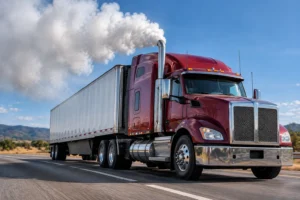 White diesel smoke often comes from unburned fuel or coolant.
- White smoke during a cold start may disappear as the engine warms.
- Bad fuel injectors can cause persistent white smoke.
- Low engine compression can prevent diesel fuel from burning properly.
- White smoke with coolant loss may point to an internal coolant leak.
- The timing and smell of the smoke can help narrow down the problem.
- Persistent white smoke should be diagnosed.
1. Cold Engine Temperatures
Cold engine temperatures can cause white smoke because diesel fuel needs heat to burn properly. A cold combustion chamber may not get hot enough to burn all the fuel entering the cylinder.
The unburned fuel can leave the exhaust as white smoke or vapor. The problem is most noticeable when starting a diesel engine in cold weather.
A small amount of white smoke at startup is not always a sign of a major problem. The smoke should begin to clear as the engine reaches operating temperature.
White smoke that continues after the engine is warm deserves a closer look. A fuel injector, compression problem, or coolant leak may be responsible instead.
2. Bad or Leaking Fuel Injectors
A bad fuel injector can cause white smoke when diesel fuel does not burn completely. A leaking injector or poor spray pattern can prevent the correct amount of fuel from burning inside the cylinder.
Fuel injectors are designed to deliver a precise amount of diesel into each cylinder. The fuel also needs to be sprayed correctly for proper combustion.
A faulty fuel injector may leak too much fuel into a cylinder. A worn or clogged injector nozzle can also create a poor spray pattern.
The result can be unburned fuel leaving the exhaust as white smoke.
Other signs of a fuel injector problem can include:
- Rough idle
- Hard starting
- Engine misfires
- Reduced power
- Poor fuel economy
A diesel technician can test the fuel injectors before replacing them. Injector testing helps determine whether the problem is a bad injector or another part of the fuel system.
3. Incorrect Fuel Injection Timing
Incorrect fuel injection timing can cause white smoke because diesel fuel enters the cylinder at the wrong time. The fuel may not burn completely before leaving the combustion chamber.
Fuel injection timing controls when diesel enters each cylinder. Proper timing helps the engine burn fuel efficiently and produce power.
When injection timing is incorrect, combustion can suffer. The truck may produce white smoke, run rough, or lose power.
Injection timing problems are not always easy to identify from exhaust smoke alone. Similar symptoms can come from faulty fuel injectors, low compression, or other fuel system problems.
A diesel technician can check engine data and the fuel system. This helps determine if injection timing is causing the smoke.
4. Glow Plug or Intake Heater Problems
Glow plug or intake heater problems can cause white smoke during a cold start. Both systems help create the heat needed for diesel fuel to burn when the engine is cold.
Different diesel engines use different cold-start systems. Some use glow plugs. Heavy-duty diesel engines may use an intake air heater or another starting aid.
If the cold-start system fails, the combustion chamber may remain too cold. Some of the diesel fuel may not burn completely.
Drivers may notice white smoke along with:
- Hard starting
- Longer cranking
- Rough running after startup
- Smoke that improves as the engine warms
A cold-start problem does not automatically mean a major engine repair is needed. Testing can determine whether a glow plug, intake heater, electrical connection, or another component needs repair or replacement.
5. Low Engine Compression
Low compression can cause white smoke because a diesel engine relies on compression to create heat. If compression is too low, the fuel may not ignite and burn properly.
Several internal engine problems can reduce compression. Common examples include worn piston rings, damaged valves, cylinder wear, or other internal damage.
Low compression may cause more than white smoke. A diesel truck may also become difficult to start, run rough, misfire, or lose power.
Compression problems are usually considered after simpler causes have been checked. Fuel injectors, cold-start systems, and other fuel-related problems can create similar symptoms.
A compression test can help determine whether an internal engine problem is causing the white smoke.
6. Coolant Leaking Into the Engine
Coolant entering a combustion chamber can produce thick white exhaust. An internal coolant leak is more concerning than the small amount of white smoke that may appear during a cold start.
Several engine problems can allow coolant into a cylinder. Possible causes include:
- A blown head gasket
- A cracked cylinder head
- A cracked engine block
Head gaskets create a seal between the engine block and cylinder head. A damaged head gasket can allow coolant to enter an area where it does not belong.
A cracked head or engine block can create a similar problem.
White smoke from coolant may appear with other warning signs. The coolant level may keep dropping without an obvious external leak. The engine may overheat. The exhaust may also have a sweet smell.
Persistent white smoke combined with coolant loss should be inspected quickly. Continuing to operate the truck with an internal coolant leak can lead to more serious engine damage.
The required repair depends on where the coolant leak is coming from. A technician may need to inspect the head gasket, cylinder head, cooling system, and other engine components before recommending repair or replacement.
Is the White Smoke Unburned Fuel or Coolant?
White diesel smoke can come from unburned fuel or coolant. The other symptoms can help a technician determine which one is more likely.
Unburned diesel fuel is often associated with hard starting, rough running, faulty fuel injectors, low compression, or cold engine temperatures. The smoke may improve as the engine warms if cold combustion is the cause.
Burning coolant is more concerning. Thick white exhaust combined with falling coolant levels, overheating, or a sweet smell can point to an internal coolant leak.
Smoke color also helps separate white-smoke problems from other diesel combustion issues. For example, black smoke from a diesel truck usually points toward too much fuel or not enough air. White smoke is more commonly associated with unburned fuel or coolant.
Smoke color provides a clue. The truck still needs proper testing to identify the exact problem.
What Does the Timing of White Smoke Tell You?
When the white smoke appears can help identify the cause. Smoke during a cold start may point to a different problem than smoke that continues after the engine warms up.
The pattern provides clues, not a definite diagnosis. Several diesel engine problems can produce similar symptoms.
A technician can combine the timing of the smoke with fault codes, coolant levels, injector testing, and other diagnostic results.
Can You Keep Driving a Diesel Truck Blowing White Smoke?
A diesel truck with persistent white smoke should be inspected before you continue driving it for long periods. A small amount of smoke during a cold start is different from thick smoke that continues after the engine warms up.
Watch for other symptoms such as:
- Falling coolant level
- Engine overheating
- Rough running
- Loss of power
- Hard starting
- Warning lights
- A sweet smell from the exhaust
White smoke combined with coolant loss or overheating can point to a serious internal coolant leak. Continuing to drive can make engine damage worse.
Persistent white smoke caused by unburned fuel also deserves attention. A faulty injector, compression problem, or other combustion issue can affect engine performance and fuel economy.
If the smoke becomes heavy or appears with overheating, severe power loss, or other major symptoms, have the semi inspected before continuing the trip.
How Is White Smoke Diagnosed?
Diagnosing white diesel smoke means determining whether the exhaust contains unburned fuel or coolant. A technician can then test the systems most likely to cause the problem.
A typical diagnosis may include:
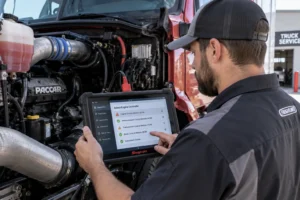 Scan the ECM for fault codes. Diagnostic trouble codes can point toward injector, fuel system, sensor, or other engine problems.
- Check the coolant level and cooling system. Falling coolant levels can provide an important clue when an internal coolant leak is suspected.
- Test the fuel injectors. Injector testing can identify leaking, damaged, or poorly performing fuel injectors.
- Check the cold-start system. Glow plugs, intake heaters, electrical connections, and related components can be tested when smoke appears mainly during startup.
- Evaluate fuel injection timing. Incorrect timing may prevent diesel fuel from burning completely.
- Test engine compression when needed. Compression testing can identify problems involving piston rings, valves, cylinders, or other internal engine components.
- Check for internal coolant leaks. Further testing may be needed to find a damaged head gasket, cracked cylinder head, or another path that allows coolant into a cylinder.
A proper diagnosis helps avoid unnecessary parts replacement. White smoke tells you something is wrong with combustion or the cooling system. Testing identifies the actual cause.
Frequently Asked Questions
Is White Smoke Normal When Starting a Diesel Truck?
A small amount of white smoke can be normal when starting a cold diesel engine. Cold combustion chambers can prevent some fuel from burning completely.
The smoke should decrease as the engine warms. Persistent white smoke after the engine reaches operating temperature may point to an injector, compression, or coolant problem.
Why Does My Diesel Blow White Smoke at Idle?
White smoke at idle can come from a fuel injector problem, low compression, or incomplete combustion. The engine may not be burning all the diesel entering a cylinder.
White smoke at idle that continues after the engine warms should be diagnosed, especially if the truck also runs rough or loses power.
Can a Bad Injector Cause White Smoke?
Yes. A bad fuel injector can cause white smoke if diesel fuel does not burn completely. A leaking injector or poor spray pattern can leave unburned fuel in the combustion chamber.
Injector testing can determine whether a fuel injector needs repair or replacement.
Does White Smoke Mean a Blown Head Gasket?
No. White smoke does not automatically mean the diesel engine has a blown head gasket. A damaged head gasket is one possible cause when coolant enters a cylinder.
Fuel injector problems, cold engine temperatures, incorrect injection timing, low compression, and cold-start system problems can also produce white smoke.
White smoke combined with coolant loss, overheating, or a sweet smell makes an internal coolant leak more likely.
Why Does My Diesel Blow White Smoke but Not Overheat?
A diesel truck can blow white smoke without overheating when unburned fuel is causing the smoke. Fuel injector problems, cold-start issues, incorrect injection timing, and low compression are possible causes.
A coolant leak also should not be ruled out solely because the engine is not overheating. Checking coolant levels and diagnosing the truck can identify the source.
Persistent White Smoke Needs a Diagnosis
 Persistent white smoke means something is preventing proper combustion or allowing coolant into the engine. The repair can range from replacing a faulty fuel injector to repairing a serious internal engine problem.
A brief puff during a cold start may disappear as the engine warms. Thick smoke that continues should not be treated the same way.
If your semi keeps blowing white smoke, schedule diesel engine service with Ferguson Truck Center. Finding the source early can help prevent unnecessary parts replacement, engine damage, and costly downtime.