Black smoke from a diesel truck usually means the engine is burning too much fuel or is not getting enough air for proper combustion. Common causes include a clogged air filter, bad fuel injectors, turbocharger problems, boost leaks, EGR issues, faulty sensors, fuel system problems, and internal engine damage.
A small puff of black smoke under heavy acceleration is different from a truck that constantly leaves a dark cloud behind it. Persistent black smoke means something is affecting the fuel-to-air ratio inside the diesel engine.
The sooner you find the cause, the better. A problem that starts with poor fuel economy or sluggish acceleration can eventually lead to damaged engine components, more downtime, and a larger repair bill.
Quick Takeaways
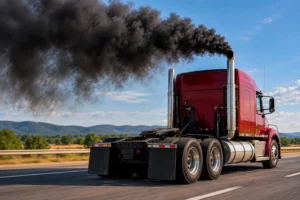 Black diesel smoke usually means too much fuel or too little air is entering the engine.
- A clogged air filter is one of the simpler problems to check.
- Black smoke with power loss can point to a turbocharger or boost problem.
- Bad fuel injectors can send too much diesel into the combustion chambers.
- The timing of the smoke can help narrow down the cause.
- Persistent black smoke should be diagnosed rather than ignored.
- Black smoke does not automatically mean the diesel engine is failing.
1. Clogged or Restricted Air Filter
A clogged air filter can cause black smoke. This happens because the diesel engine does not get enough oxygen for proper combustion. The engine continues receiving fuel, which creates an overly rich fuel-to-air ratio.
Diesel engines need a large amount of clean air. Air filters catch dirt, dust, and other debris before the air enters the engine. As an air filter becomes clogged, less air can pass through it.
A restricted air filter may cause:
- Black exhaust smoke
- Sluggish acceleration
- Reduced engine power
- Poor fuel economy
- Increased fuel consumption
The air filter is one of the first components worth inspecting when black smoke appears. A dirty filter can often be replaced without major repairs.
The intake system should also be inspected if replacing a clogged air filter does not solve the problem. Another restriction may be limiting the amount of air entering the combustion chamber.
2. Dirty or Failing Fuel Injectors
A dirty, leaking, or failing fuel injector can cause black smoke by sending too much diesel fuel. It can also create a poor spray pattern. The extra fuel cannot burn completely, so soot leaves the exhaust as black smoke.
Modern diesel fuel injection systems are designed to deliver a precise amount of fuel into each cylinder. The timing and spray pattern matter. Diesel fuel needs to mix properly with the air inside the combustion chambers for efficient combustion.
A worn fuel injector may leak fuel when it should be closed. A clogged or damaged injector nozzle can also change the spray pattern. Instead of producing a fine mist, the injector may deliver fuel that does not mix well with the air.
Injector problems can cause more than black smoke. Drivers may also notice rough idling, hard starting, reduced power, poor fuel economy, or unusual engine noise.
A technician can test the fuel injection system to determine whether an injector is dirty, damaged, or failing. Proper testing matters because replacing fuel injectors without confirming the problem can become expensive quickly.
3. Turbocharger Problems
A failing turbocharger can cause black smoke when the diesel engine does not receive enough compressed air under load. The engine may keep getting fuel even when the turbo no longer provides enough air to burn it well.
A diesel turbocharger uses exhaust energy to compress air entering the engine. The additional air allows the engine to burn more fuel efficiently and produce more power.
When the turbocharger cannot create the expected boost, the fuel-to-air ratio becomes too rich. Black smoke may become especially noticeable when accelerating, climbing a grade, or pulling a heavy trailer.
Common signs of a turbo problem include:
- Black smoke under acceleration
- Noticeable power loss
- Slow acceleration
- Abnormal turbo noise
- Low boost readings
Black smoke does not automatically mean the turbocharger needs replacement. A technician should test turbo operation and inspect the surrounding intake and charge-air system first.
The turbo may be working correctly while a separate leak allows compressed air to escape.
4. Boost or Charge-Air Leaks
A boost leak can cause black smoke because compressed air escapes before reaching the diesel engine. The turbocharger may produce boost normally, but the engine still receives less air than expected.
The charge-air system carries compressed air from the turbocharger toward the engine. Depending on the truck, the system includes hoses, boots, clamps, pipes, and a charge-air cooler.
A cracked hose, loose clamp, damaged connection, or leaking charge-air cooler can allow pressurized air to escape.
The engine control system may continue supplying fuel based on the amount of air the engine should be receiving. The missing air creates an improper fuel-to-air ratio and incomplete combustion.
A boost leak commonly causes black smoke along with poor acceleration or reduced pulling power. Drivers may notice the problem most when the engine is under load.
Technicians can pressure-test the charge-air system to locate leaks that may not be obvious during a visual inspection.
Finding a leaking hose or charge-air cooler before replacing the turbocharger can save a considerable amount of money.
5. EGR System Problems
A faulty exhaust gas recirculation system can cause black smoke by upsetting airflow and combustion in a diesel engine. Carbon deposits, a sticking EGR valve, or another EGR system problem can change how much fresh air reaches the cylinders.
The EGR system routes a controlled amount of exhaust gas back into the intake. The engine control module manages EGR operation based on engine conditions.
Diesel exhaust naturally produces soot. Over time, carbon deposits can build up in EGR valves, passages, and related intake components.
Heavy carbon buildup can restrict airflow. An EGR valve that sticks in the wrong position can also affect the amount of oxygen entering the combustion chamber.
The result may include black smoke, reduced engine performance, rough operation, or a check engine light.
EGR problems should be properly diagnosed. Thats because several intake, sensor, and boost problems can create similar symptoms.
A technician can inspect EGR operation and determine whether a component needs cleaning, repair, or replacement.
6. Faulty Airflow or Boost Sensors
A bad airflow or boost sensor can cause black smoke. The engine may receive incorrect airflow readings and inject too much fuel.
Diesel engines use several sensors to monitor airflow and boost. These can include the mass airflow (MAF) sensor, manifold absolute pressure (MAP) sensor, and boost-pressure sensor.
The MAF sensor measures mass airflow entering the intake system. Other sensors monitor pressure and operating conditions inside the intake.
A bad MAF or boost sensor can cause the engine to inject too much fuel. The extra fuel may not burn completely, which can produce black smoke.
Sensor problems may also trigger fault codes or warning lights.
A diagnostic scan can identify stored trouble codes and show live sensor readings. Technicians can compare those readings with expected values before replacing a sensor.
A sensor code does not always mean the sensor itself has failed. Wiring problems, air leaks, or another engine problem can sometimes produce misleading readings.
7. Fuel System or Engine Calibration Problems
Fuel system or engine calibration problems can cause too much fuel to enter the engine. High fuel pressure, incorrect fuel delivery, or improper tuning can then cause black smoke.
Diesel fuel systems operate under precise pressure and timing requirements. Problems with fuel pressure control or other fuel system components can change how much fuel reaches the cylinders.
Engine calibration also controls fuel injection based on engine speed, load, airflow, boost pressure, and other inputs.
An incorrect or poorly matched calibration can command more fuel than the engine can burn efficiently. Modified diesel trucks can be especially sensitive to changes that affect fueling and airflow.
Fuel system problems may cause black smoke along with poor fuel economy, rough operation, or changes in engine performance.
A technician can check fuel pressure, review engine data, read fault codes, and assess engine calibration before recommending repairs.
The goal is to find out why the engine is overfueling rather than replacing parts based on the smoke alone.
8. Internal Engine Problems
Internal engine problems can also cause black smoke. Low compression, damaged valves, or cylinder problems can prevent diesel fuel from burning properly.
A diesel engine relies heavily on compression. Air inside each cylinder becomes hot when compressed. Fuel entering the combustion chamber then ignites.
If a cylinder cannot produce proper compression, combustion can suffer.
Internal engine problems are usually not the first place to start when diagnosing black smoke. Air filters, intake restrictions, boost leaks, turbocharger operation, fuel injectors, sensors, and the EGR system are often easier to inspect and test.
However, persistent smoke may require deeper engine testing when those systems check out.
A technician may perform compression testing or other mechanical tests to determine whether internal engine wear or damage is involved.
Internal engine damage can become expensive. Confirming the diagnosis before replacing major engine components is especially important.
What Does the Timing of Black Smoke Tell You?
When black smoke appears can provide useful clues about the underlying problem. Black smoke during acceleration, for example, often points toward a different group of problems than black smoke at idle.
These symptoms are clues rather than a definite diagnosis.
A boost leak and a failing turbocharger can both cause black smoke and power loss. A bad fuel injector can create symptoms that overlap with other fuel system problems.
The best diagnosis combines the driver’s symptoms with fault codes, live engine data, visual inspection, and mechanical testing.
Can You Keep Driving a Diesel Truck Blowing Black Smoke?
You should not continue driving a diesel truck with persistent or heavy black smoke without finding the cause. A small, brief puff under certain operating conditions is one thing. A continuous black exhaust accompanied by power loss or other symptoms is another.
Heavy black smoke means the diesel engine is not burning fuel properly. Continued operation can waste fuel, increase carbon deposits, and place additional stress on engine and emissions components.
Pay particular attention when black smoke appears with:
- Severe loss of power
- Engine warning lights
- Overheating
- Rough running
- Unusual engine or turbo noises
- Rapidly worsening smoke
Those symptoms can indicate a problem that may become more expensive if the truck stays on the road.
Visible smoke can also create emissions and roadside inspection concerns for a commercial diesel vehicle. The exact requirements depend on the truck, engine, jurisdiction, and operating conditions.
If the truck suddenly produces heavy smoke or develops serious performance problems is essential to get an inspection.
How Is Black Smoke Diagnosed?
Diagnosing black smoke starts by determining whether the diesel engine has an air, fuel, boost, emissions, sensor, or mechanical problem. A technician should test the systems involved instead of assuming one component is responsible.
A typical diagnosis may include the following steps:
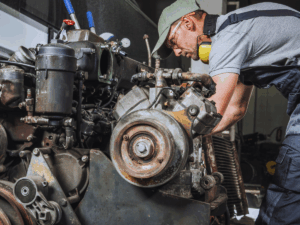 Scan the ECM for fault codes. Stored diagnostic trouble codes can identify problems involving sensors, fuel injection, turbo boost, EGR operation, and other engine systems.
- Inspect the air filter and intake. The technician checks for a clogged air filter, intake restriction, damaged piping, or anything else limiting air entering the engine.
- Check turbocharger operation. Boost pressure and turbo performance can show whether the turbocharger is supplying the expected amount of compressed air.
- Pressure-test the charge-air system. A pressure test can locate leaking hoses, boots, clamps, pipes, or charge-air coolers.
- Inspect the EGR system. The technician can check EGR operation and look for carbon deposits or restrictions affecting airflow.
- Test the fuel injectors and fuel delivery system. Injector testing can identify excessive fueling, leaking injectors, poor spray patterns, or other fuel injection problems.
- Check engine condition if necessary. Compression or additional mechanical testing may be needed when the air, fuel, turbo, and emissions systems do not explain the smoke.
Good diesel diagnostics can prevent unnecessary parts replacement. Black smoke tells you combustion is wrong. Testing tells you why.
Frequently Asked Questions
Does Black Smoke Mean My Diesel Engine Is Bad?
No. Black smoke does not automatically mean the diesel engine has internal damage. Black smoke commonly results from too much fuel, too little air, a boost problem, a bad fuel injector, an EGR issue, or incorrect sensor readings.
Internal engine damage is one possibility, but technicians usually check the air, fuel, turbo, and emissions systems before assuming the engine itself needs major repair.
Can a Dirty Air Filter Cause Black Smoke?
Yes. A dirty or clogged air filter can cause black smoke by restricting the amount of fresh air entering the engine. The diesel engine may continue receiving fuel even though there is not enough oxygen available for proper combustion.
Replacing a severely restricted air filter may correct the problem if no other intake, fuel, or engine issues are present.
Why Does My Diesel Blow Black Smoke When Accelerating?
A diesel truck that blows black smoke during acceleration may not be receiving enough air for the additional fuel being injected under load. Common causes include a clogged air filter, boost leak, turbocharger problem, fuel injector issue, or excessive fueling.
Acceleration places greater demand on the turbocharger and fuel injection system. Problems that are less noticeable at idle can become obvious when the engine is working harder.
Can a Bad Turbo Cause Black Smoke?
Yes. A failing turbocharger can cause black smoke when the turbo cannot supply enough compressed air to the diesel engine. The engine may receive more fuel than the available oxygen can burn completely.
Black smoke combined with poor acceleration or reduced pulling power can point toward a turbo or boost problem.
The turbocharger should still be tested before replacement. A leaking charge-air hose or charge-air cooler can create similar symptoms even when the turbo itself is working.
What’s the Difference Between Black, White, and Blue Diesel Smoke?
Diesel smoke color can provide clues about what is wrong with the engine.
Black smoke usually means too much fuel or not enough air.
White smoke often points to incomplete combustion. Fuel injector problems, low compression, and other issues can cause white smoke from a diesel truck.
Blue or blue-gray smoke usually means the engine is burning oil.
Smoke color alone cannot confirm the problem. A diesel technician can diagnose the actual cause.
Black Smoke Is Your Truck Telling You Something
 Black smoke from your diesel is a symptom. It is not a diagnosis.
The problem could be as straightforward as a clogged air filter or leaking charge-air hose. A failing fuel injector, turbocharger, EGR component, sensor, or fuel system part could also be responsible. In some cases, black smoke can point toward a more serious internal diesel engine problem.
That is why replacing parts based on smoke alone can get expensive.
If your semi is blowing black smoke, losing power, or burning more fuel than normal, schedule diesel engine repair and diagnostics with Ferguson Truck Center. Finding the problem early can help prevent unnecessary parts replacement, additional engine damage, and costly downtime.