Air leaks are one of the most common air brake problems affecting semi-trucks and trailers. Unfortunately, many drivers don’t realize they have a leak until a warning light appears or the truck starts behaving differently.
Even a small leak can create bigger problems. It can reduce braking performance, increase air compressor wear, cause DOT violations, and leave a truck stranded roadside.
The good news is that air brake leaks usually provide warning signs before they become major failures. Recognizing those symptoms early can help you avoid unsafe driving conditions, costly repairs, and unexpected downtime.
Quick Takeaways
- Air leaks are the leading cause of low air pressure issues.
- Hissing sounds are often the first sign of a leak.
- Slow air pressure buildup may indicate a hidden leak.
- Air leaks force the compressor to work harder.
- Low air pressure warnings should never be ignored.
- Brake performance can suffer when air pressure drops.
- Finding leaks early can prevent roadside breakdowns and DOT violations.
9 Air Brake Leak Symptoms Every Truck Driver Should Know
1. Hissing Sounds Around the Truck or Trailer
A hissing sound is often the first indication of an air leak.
You may hear air escaping from brake chambers, air lines, glad hands, fittings, valves, or trailer connections. Sometimes the leak is obvious. Other times, it may only become noticeable when the brake pedal is applied.
Small leaks rarely stay small. Vibration, weather exposure, and normal wear can cause minor leaks to become larger over time.
2. Air Pressure Drops While Parked
A properly functioning air brake system should hold pressure when the truck is parked.
If you notice significant pressure loss overnight or during a short stop, there is a good chance air is escaping somewhere in the system.
Many leaks are easier to find when the truck is parked. Engine noise is gone. Pressure changes are also easier to check.
3. Slow Air Pressure Buildup
One of the most overlooked symptoms of an air leak is slow pressure recovery.
After starting the truck, the brake system should build air pressure within a reasonable amount of time. If the gauges rise slowly or take longer than normal to reach operating pressure, a leak may be forcing the compressor to work harder.
Slow pressure buildup can delay departures and create operational headaches for drivers and fleet managers.
4. Low Air Pressure Warning Light or Alarm
The low air pressure warning light and alarm exist for a reason.
These warning systems activate when air pressure falls below a safe operating range. If the warning light appears or the alarm sounds, treat it as a serious issue.
Low pressure affects the performance of air brake systems and can create dangerous driving conditions if ignored.
5. Air Compressor Runs Constantly
Air compressors naturally cycle on and off as pressure changes.
When a leak develops, the compressor may run much more frequently to replace lost air. Over time, this extra workload can increase wear on the compressor and shorten its lifespan.
A constantly running compressor is often a symptom rather than the root cause. In many cases, the real issue is an air leak elsewhere in the system.
6. Reduced Braking Performance
Air brakes rely on pressure to generate stopping force.
When pressure drops because of a leak, braking performance can suffer. Drivers may notice longer stopping distances, weaker brake application, or slower response when pressing the brake pedal.
Any noticeable change in braking performance should be inspected immediately.
7. Brake Drag
Brake drag occurs when the brakes do not fully release after being applied.
This condition can cause excessive heat, accelerated wear, reduced fuel efficiency, and damage to brake components. In some cases, air leaks can contribute to brake drag by interfering with normal air pressure delivery.
If the truck feels sluggish or you notice excessive brake heat, the air system should be inspected.
8. Spring Brakes Engage Unexpectedly
Spring brakes are designed as a safety feature.
When air pressure drops too low, the spring brakes can engage automatically. This helps prevent a runaway vehicle but can also leave a truck immobilized.
An air leak that causes repeated low-pressure conditions can trigger unexpected spring brake activation and create major downtime.
9. Failed DOT Inspections
Air brake leaks are a common reason trucks fail roadside inspections.
DOT inspectors pay close attention to air brake systems because leaks directly affect vehicle safety. Excessive air loss, malfunctioning components, or pressure issues may result in violations or an out-of-service order.
Addressing leaks before an inspection can help prevent costly delays and compliance issues.
Where Do Air Brake Leaks Usually Occur?
Air leaks can develop almost anywhere within air brake systems, but certain locations fail more frequently than others.
Common leak points include: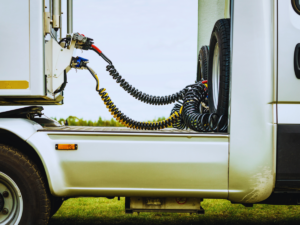
- Brake chambers
- Air lines and hoses
- Glad hands
- Push-to-connect fittings
- Relay valves
- Air tanks
- Trailer air connections
Because air systems have many connections and moving parts, routine inspections are vital. They help find leaks before they become major problems.
How Mechanics Find Air Brake Leaks
Professional technicians use several methods to identify air leaks quickly and accurately.
Listening for Audible Leaks
Many leaks can be found simply by listening.
Technicians often inspect the truck while it is fully aired up. They listen for hissing sounds near chambers, valves, hoses, and trailer connections.
This method can quickly identify larger leaks.
Using a Soap and Water Test
A soap and water solution is one of the most reliable leak detection methods.
The solution is sprayed onto suspected leak areas. If air is escaping, bubbles will form and reveal the exact location of the leak.
This approach works especially well for fittings, hoses, and connection points.
Performing Leak-Down Testing
Leak-down testing measures how much air pressure the system loses over a specific period.
This process helps technicians determine whether the air loss falls within acceptable limits or indicates a significant leak.
It also helps identify leaks that are difficult to hear or see.
Can You Drive With an Air Brake Leak?
The answer depends on the severity of the leak.
A very minor leak may not create immediate safety concerns, but it still requires repair. Larger leaks can quickly affect brake performance, trigger warning systems, or cause pressure to drop below safe operating levels.
If you notice low air pressure warnings, weak braking, fast pressure loss, or spring brakes activating, do not drive. Repair the truck first.
Delaying repairs increases safety risks and raises the likelihood of larger, more expensive failures.
Why Air Brake Leaks Get Worse Over Time
Air leaks rarely remain unchanged.
As leaks grow, the compressor must work harder to maintain pressure. Increased compressor cycling can accelerate wear and contribute to premature component failure.
Leaks can also allow moisture contamination to become a bigger problem. Over time, corrosion, valve damage, and additional air system failures may develop.
What begins as a small leak can eventually result in major repairs, costly downtime, or an unexpected roadside breakdown.
How to Prevent Air Brake Leaks
Preventing air leaks starts with regular inspections and proactive maintenance.
Drivers and fleet operators should:
- Conduct pre-trip inspections
- Listen for unusual sounds
- Monitor air pressure gauges
- Inspect hoses and fittings regularly
- Address minor leaks promptly
- Schedule routine brake system inspections
A few minutes spent checking the air brake system can prevent hours of downtime later.
FAQ
What is the most common symptom of an air brake leak?
The most common symptom is a hissing sound near the truck or trailer. Many drivers hear the leak before they notice any other problems.
How much air pressure loss is normal when parked?
Some pressure loss is expected, but excessive pressure loss while parked may indicate an air leak. Significant overnight pressure loss should be inspected by a technician.
Can a truck pass a DOT inspection with an air leak?
It depends on the severity of the leak. Excessive air loss or brake system defects can result in violations or an out-of-service order.
Why does my air compressor keep running?
A constantly running compressor often indicates the system is losing air faster than normal. Air leaks are one of the most common causes.
What causes air brake leaks?
Common causes include worn hoses, damaged fittings, failing brake chambers, cracked air lines, faulty valves, and aging components.
How do mechanics find air brake leaks?
Technicians often use listening checks, soap and water tests, and leak-down tests to find leaks and measure pressure loss.
Can a small air leak become a major repair?
Yes. Small leaks often worsen over time and can increase compressor wear, reduce braking performance, and lead to additional component failures.
Don’t Let a Small Air Leak Turn Into a Big Breakdown
 Air brake leaks rarely fix themselves. What starts as a minor hiss can quickly become low air pressure, brake performance issues, or an out-of-service violation.
At Ferguson Truck Center, we offer expert trailer truck repairs and air brake diagnostics in Houston, TX. We also serve nearby areas. Our technicians quickly find air leaks, fix damaged parts, and help keep your trucks and trailers safe, compliant, and on the road.
If you suspect an air leak in your brake system, contact Ferguson Truck Center today. We offer expert truck and trailer repairs in Houston.